
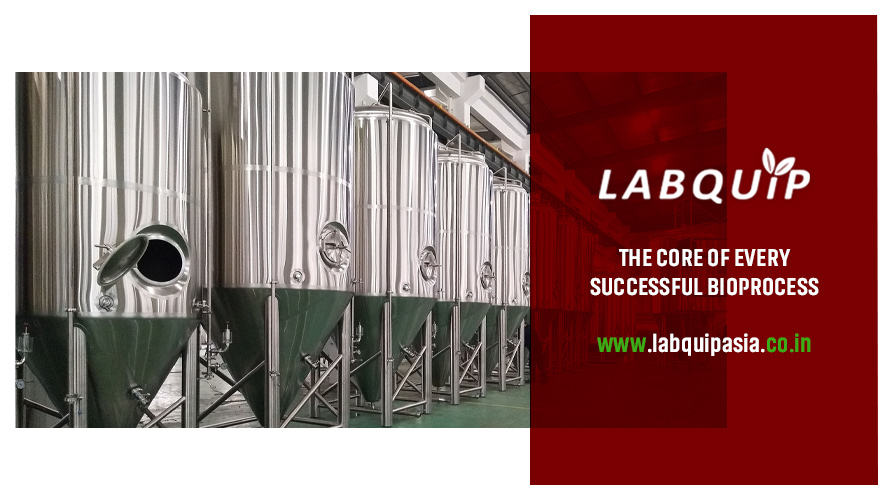
Why the Right Fermenter Defines Bioprocess Success
Biotechnology has evolved far beyond basic microbial cultivation. Today’s research laboratories demand intelligent systems capable of delivering reproducible results, scalable performance and process stability under changing experimental conditions. This growing demand has increased the adoption of biotech fermenter systems across academic institutions, pharmaceutical R&D center and industrial research facilities.
Whether teams are working on microbial strain optimization, enzyme production, or cell-based bioprocess development, choosing the right laboratory fermentation solutions directly impacts productivity, consistency and commercial viability. Modern fermentation systems for research laboratories are no longer viewed as simple vessels—they are integrated platforms designed to support innovation with data-driven control.
Understanding Fermenter Selection Criteria
One of the most searched questions in modern bioprocessing is how to choose the right laboratory fermenter. The answer depends on multiple technical and operational factors. Researchers must evaluate vessel material, working volume, automation architecture, sterilization capability, sensor integration and future scale-up compatibility.
A system that performs efficiently in microbial screening may not always support advanced pharmaceutical process development. This is why selecting the best fermenter for microbial research requires more than comparing product specifications. Laboratories need systems designed for flexibility, repeatability and long-ter process optimization.
Bioreactor Versus Fermenter Differences
Many research teams still struggle with the differences between bioreactor and fermenter, and that confusion often leads to costly equipment decisions. While both systems support controlled biological growth, fermenters are traditionally optimized for microbial cultivation involving bacteria, fungi and yeast-based processes.
Understanding this distinction helps laboratories align equipment selection with application requirements, especially when building fermenter systems for bacteria and fungi cultivation or microbial product development pipelines.
Automation Improves Process Stability
Modern laboratories increasingly invest in advanced fermenter technology because automation dramatically improves process reliability. An automated fermenter with pH and DO control gives researchers real-time command over critical parameters such as dissolved oxygen, aeration, agitation, temperature and nutrient feeding. These control capabilities reduce batch variation, improve biomass productivity and create reproducible process conditions.
In highly regulated environments such as pharmaceuticals, reliable automation becomes essential when implementing pharmaceutical fermentation equipment for validated production workflows.
Scaling Beyond Laboratory Research
As research moves toward commercialization, scalability becomes one of the biggest challenges. A lab scale fermenter for biotech applications may deliver excellent small-volume results, but process consistency must remain intact during scale-up. This is where pilot scale fermenter process development becomes essential.
Pilot-scale fermenters are suitable of scaling up processes, offering working volumes starting around 15 liters and extending to several hundred liters while maintaining consistent control, monitoring and process reproducibility. These systems allow organizations to validate oxygen transfer, agitation efficiency, feeding strategies and microbial growth behaviour before entering industrial production.
Pharmaceutical Labs Need Control
In regulated production environments, equipment performance directly affects compliance, product quality and process repeatability. This is why fermenter systems for pharmaceutical laboratories are designed with advanced monitoring systems, sterile process architecture and digital process recording capabilities.
High-performance pharmaceutical fermentation equipment helps organizations maintain process integrity while supporting research, validation and scale-up under strict operational standards. For modern laboratories, investing in robust fermentation systems is not simply about equipment—it is about building future-ready process infrastructure.
CTA
Explore Smarter Fermentation Systems
If your laboratory is planning microbial research, pharmaceutical process development, or pilot-scale production, choosing the right fermenter can define the success of your entire bioprocess journey. Discover advanced fermentation solutions engineered for control, scalability, and research excellence with Labquip.
FAQs
What is the best fermenter for microbial research?
The best fermenter depends on your process goals, organism type, automation needs, and future scale-up requirements. Systems with pH, DO, and feeding control usually deliver stronger research consistency.
What is a pilot scale fermenter used for?
A pilot scale fermenter is used to validate process conditions before industrial production, ensuring scalability and stable process performance.
What is the difference between a fermenter and a bioreactor?
A fermenter is commonly optimized for microbial fermentation, while a bioreactor may support a wider range of biological processes including cell culture.
Why is automation important in fermenters?
Automation improves parameter control, reduces process variation, increases reproducibility, and supports regulatory compliance in research and production environments.