
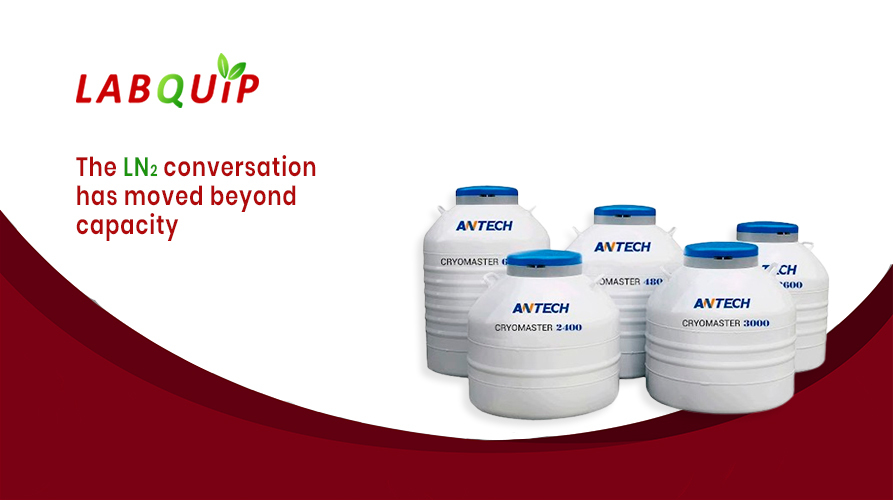
What’s Changing in Laboratory Cryogenic Storage? Everything That Matters
Laboratory cryogenic storage is no longer treated as a supporting function. It has become a strategic pillar in modern lab operations. Across pharma manufacturing units, biotech research facilities, IVF centres, and advanced laboratories, the liquid nitrogen container has moved from the background into critical focus.
Why? Because the value of stored samples has multiplied. Research timelines are longer. Regulatory scrutiny is sharper. And the margin for error has disappeared.
Today, a liquid nitrogen container for laboratory use is not selected just to store LN2—it is chosen to protect years of work, sensitive data, and operational credibility.
Why Liquid Nitrogen Containers Are Being Re-evaluated
Earlier, laboratories selected containers based on volume and price. That approach is fading fast.
Modern labs now examine:
- Cryogenic stability over long durations
- Safety during frequent sample access
- Suitability for storage, transfer, and transport
- Compatibility with evolving laboratory workflows
This change has elevated the role of the laboratory liquid nitrogen container from a utility item to a long-term investment.
- From Simple Storage to Controlled Cryogenic Environments
A liquid nitrogen container was once expected to “hold cold.” Today, it must maintain control.
A modern liquid nitrogen container for laboratory storage is evaluated on:
- Thermal efficiency and insulation performance
- Reduced evaporation and LN2 consumption
- Structural integrity during routine handling
- Stability during extended static storage
These factors directly affect sample integrity, especially in laboratories managing high-value biological materials and pharmaceutical research samples.
- Multiple Laboratory Needs, Multiple Liquid Nitrogen Container Types
One container no longer fits all laboratory applications.
Laboratories now deploy different liquid nitrogen containers for laboratory environments, depending on usage:
- Liquid nitrogen container for long-term laboratory sample preservation
- Medium-capacity containers for routine lab operations
- Compact liquid nitrogen containers for internal movement
- Liquid nitrogen container for short-distance laboratory transportation
This segmentation improves safety, efficiency, and workflow clarity—reducing unnecessary handling risks.
- Safety and Handling Are No Longer Secondary Concerns
Liquid nitrogen handling is part of daily laboratory life, but that doesn’t reduce its risk.
Today’s laboratories prioritise liquid nitrogen containers for laboratory use that support:
- Safe sample access
- Stable container balance
- Controlled LN2 exposure
- Reduced operator risk during daily operations
Design, usability, and operational ergonomics now matter just as much as capacity.
- Long-Term Sample Preservation Has Raised Expectations
Cryogenic storage is increasingly linked to long-term outcomes. Whether it’s clinical research, pharma development, or biological archiving, sample loss is not an option.
A dependable liquid nitrogen container for laboratory sample preservation ensures:
- Consistent cryogenic temperatures
- Minimal temperature fluctuation
- Protection against external environmental factors
This reliability is now expected—not exceptional.
- Scalability Is Built into Modern LN2 Storage Planning
Laboratories rarely remain static. Sample volumes grow. Research pipelines expand.
A future-ready liquid nitrogen container laboratory setup must:
- Support increasing storage demand
- Integrate into existing lab infrastructure
- Allow expansion without operational disruption
This is why scalability has become a key evaluation parameter during container selection.
- Supplier Knowledge Is Shaping Buying Decisions
As expectations rise, laboratories are becoming more selective—not just about products, but about expertise.
A trusted supplier understands:
- How laboratories actually use LN2 containers
- The difference between storage, handling, and transport requirements
- The long-term implications of container selection
Choosing the right liquid nitrogen container for laboratory applications now begins with choosing a supplier who understands laboratory realities—not just specifications.
The Bigger Shift Laboratories Are Responding To
Cryogenic storage has evolved.
It is no longer about cold alone.
It is about control, continuity, and confidence.
Laboratories investing in the right liquid nitrogen container for laboratory use are not reacting to trends—they are building resilient systems that support research integrity, regulatory alignment, and operational stability.
Those who understand this shift are already ahead.
CTA – From Labquip Asia
Searching for a reliable liquid nitrogen container for your laboratory?
Labquip Asia supplies laboratory-grade liquid nitrogen containers engineered for safe storage, efficient handling, and dependable cryogenic performance.
Connect with Labquip Asia to identify the right liquid nitrogen container for your laboratory—built for today’s needs and tomorrow’s growth.
FAQs: Liquid Nitrogen Containers for Laboratory Use
- What is a liquid nitrogen container used for in laboratories?
A liquid nitrogen container is used for cryogenic storage and preservation of biological samples, pharmaceutical materials, and research specimens at extremely low temperatures. - How do I select the right liquid nitrogen container for laboratory use?
Selection depends on storage duration, sample volume, handling frequency, and whether the container is required for static storage or laboratory transportation. - Are liquid nitrogen containers suitable for long-term laboratory sample storage?
Yes. A properly designed liquid nitrogen container for laboratory sample preservation supports long-term stability when used under recommended conditions. - Can one liquid nitrogen container support multiple laboratory applications?
Some containers offer flexibility, but laboratories often use different liquid nitrogen containers for storage, handling, and transport to maintain safety and efficiency. - Why is supplier expertise important when sourcing liquid nitrogen containers?
An experienced supplier ensures the liquid nitrogen container aligns with laboratory workflows, safety expectations, and future scalability needs.