
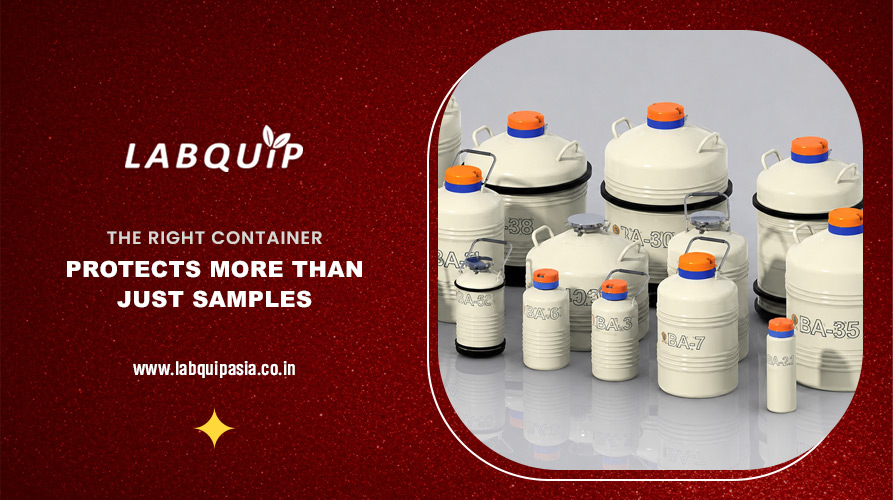
Not Every Liquid Nitrogen Container Is Built for Every Laboratory
Walk into an IVF clinic, a pharmaceutical manufacturing facility, a biotechnology laboratory, or an industrial plant, and you’ll likely find a liquid nitrogen container playing a critical role. At first glance, these containers may appear similar, but their purpose, capacity, design, and performance requirements differ significantly depending on the application. Assuming that one storage solution fits every environment can lead to higher evaporation losses, operational inefficiencies, and unnecessary costs.
Whether you’re looking to buy liquid nitrogen container systems for preserving biological samples or supporting industrial processes, understanding the differences is the first step toward long-term efficiency. A reliable liquid nitrogen container supplier doesn’t simply offer products—they help organizations identify cryogenic storage solutions that match their operational requirements, storage volumes, and future expansion plans.
Laboratory Storage Requirements
Every laboratory works with unique materials, making storage requirements equally unique. A laboratory liquid nitrogen container used in an IVF centre has a completely different purpose from one used in a pharmaceutical research laboratory or a university research facility. Embryos, stem cells, blood samples, tissue cultures, vaccines, and biological specimens all require stable cryogenic environments to preserve their integrity over extended periods.
This is where a cryogenic liquid nitrogen container becomes more than just storage equipment. Factors such as storage duration, sample retrieval frequency, internal configuration, insulation quality, and monitoring capabilities directly influence performance. Laboratories storing thousands of samples often require specialised rack systems, canisters, or vial storage configurations, while smaller facilities may benefit from compact containers that maximise storage without occupying valuable laboratory space.
A dependable liquid nitrogen storage container should also support laboratory workflows rather than complicate them. Easy handling, low evaporation rates, durable construction, and reliable temperature retention contribute to smoother day-to-day operations while reducing operating costs over time.
Industrial Storage Applications
Cryogenic storage extends far beyond healthcare and research. Many industries rely on liquid nitrogen for manufacturing, food processing, electronics, metallurgy, and various engineering applications. An industrial liquid nitrogen container must withstand demanding environments while ensuring safe storage and transportation of cryogenic liquids under continuous operation.
Industrial users often prioritise larger storage capacities, robust construction, efficient transfer systems, and easy mobility. Unlike laboratory environments where preserving sensitive biological samples is the primary concern, industrial operations focus on maintaining production efficiency without interruptions caused by inadequate storage infrastructure.
Many organisations also require specialised transfer vessels and bulk storage systems. Working with an experienced liquid nitrogen storage tank supplier ensures access to storage options that align with operational demands instead of relying on one-size-fits-all solutions. From compact transport containers for short-distance applications to high-capacity stainless steel storage vessels with self-pressurisation features, modern cryogenic storage solutions are designed to support a wide range of industrial requirements while maintaining safety and reliability.
Supplier Expertise Creates Value
Buying cryogenic equipment isn’t only about comparing specifications on a datasheet. The real value comes from working with a supplier that understands how different industries use liquid nitrogen every day. A knowledgeable liquid nitrogen container supplier helps organisations evaluate storage capacity, application requirements, transportation needs, monitoring systems, and future scalability before recommending a solution.
For laboratories across the country, partnering with an experienced liquid nitrogen container supplier in India also simplifies product availability, technical support, and after-sales service. Whether the requirement is a compact laboratory dewar or a high-capacity storage vessel, expert guidance helps avoid unnecessary investments and ensures the equipment supports long-term operational goals.
Many facilities also look for a trusted LN2 container supplier, liquid nitrogen dewar supplier, or liquid nitrogen vessel supplier capable of providing multiple cryogenic storage options under one roof. Rather than dealing with multiple vendors, organisations benefit from working with a supplier that offers application-focused solutions for laboratories, hospitals, research institutes, biotechnology companies, blood banks, and industrial facilities.
Future-Ready Cryogenic Solutions
As laboratories and industries continue to grow, storage requirements evolve alongside them. A cryogenic system that meets today’s needs may become insufficient as sample volumes increase or operations expand. Planning for future growth helps organisations avoid frequent equipment replacements and operational disruptions.
Before investing in a liquid nitrogen storage container, consider factors such as storage capacity, insulation efficiency, evaporation rates, portability, safety features, and compatibility with monitoring systems. Facilities handling biological samples may also benefit from vapour-phase storage systems, specialised vial racks, canister configurations, and automated liquid nitrogen transfer solutions that improve efficiency while reducing manual handling.
Many buyers compare every cryogenic container manufacturer and supplier before making a purchase, but selecting a supplier with a broad portfolio often provides greater flexibility. Access to aluminium dewars, stainless steel storage containers, cryogenic transport vessels, dry shippers, and self-pressurised storage systems allow organisations to build a storage strategy that supports both current operations and future expansion.
The right cryogenic storage solution isn’t defined by size alone—it’s defined by how effectively it protects valuable samples, supports everyday workflows, and delivers reliable performance for years to come.
Find the Right Cryogenic Storage Solution
Every laboratory and industrial facility has unique storage challenges, and the right equipment depends on the application—not just the capacity. At Labquip Asia, we supply a comprehensive range of liquid nitrogen storage containers, laboratory dewars, transport containers, self-pressurised storage systems, dry shippers, and advanced cryogenic storage solutions sourced from trusted manufacturers. Whether you’re expanding a research laboratory, supporting an IVF clinic, or upgrading industrial cryogenic infrastructure, our team helps you find dependable solutions tailored to your operational requirements.
Frequently Asked Questions
- What is a liquid nitrogen container used for?
A liquid nitrogen container stores liquid nitrogen safely for cryogenic applications such as biological sample preservation, IVF, pharmaceuticals, biotechnology research, industrial processing, and laboratory storage.
- Who needs a laboratory liquid nitrogen container?
Research laboratories, IVF centres, hospitals, blood banks, pharmaceutical companies, biotechnology organisations, and universities commonly use laboratory liquid nitrogen containers for long-term cryogenic storage.
- How is an industrial liquid nitrogen container different from a laboratory container?
Industrial containers are designed for larger storage capacities, continuous operation, and manufacturing applications, while laboratory containers prioritise sample preservation, accessibility, and specialised storage configurations.
- Why should I work with a liquid nitrogen container supplier in India?
A reliable supplier provides technical guidance, application-based recommendations, product availability, installation support, and after-sales service, helping organisations invest in cryogenic storage solutions that meet their operational needs.
- What should I consider before buying a liquid nitrogen storage container?
Important factors include storage capacity, evaporation rate, insulation quality, intended application, transportation requirements, safety features, monitoring systems, and future scalability to ensure long-term performance and reliability.