
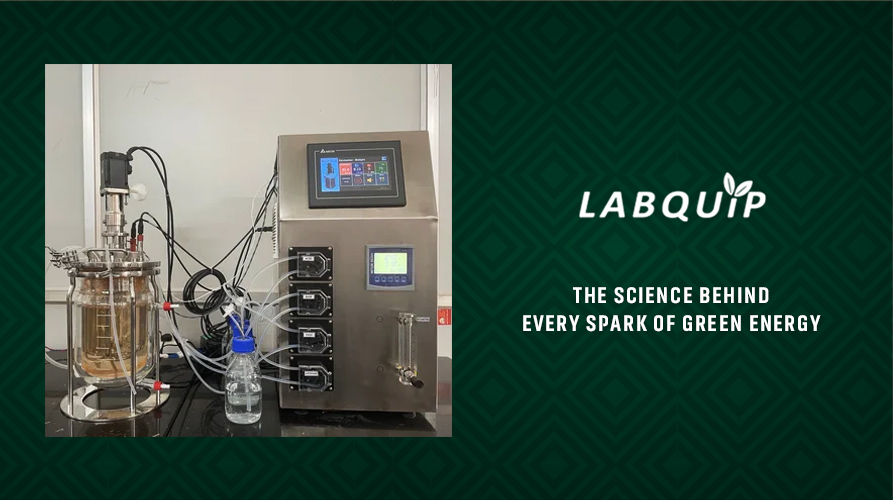
Do You Know the Tech Behind Tomorrow’s Green Energy?
Photobioreactors Are the Major Factors!
Due to the global trend towards sustainability, photobioreactors have been recognized as the powerful hidden force behind green innovation. Improving and controlling microalgae growth is the key to incredible opportunities in many areas like renewable fuels, and pharmaceuticals — and advanced photobioreactor systems are at the epicenter of it all.
What is the Reason for Photobioreactors to be so Rebellious?
Photobioreactors for algae cultivation differ from traditional bioreactors in that they use light, gas, and temperature control in a synergistic manner to the fullest to hasten the biological processes. These systems simulate the natural environment of photosynthesis thus creating the best conditions for the growth of algae — the organism that can provide us with not only biofuels and bioplastics but also the valuable biomolecules that are used in food, cosmetics, and healthcare.
The latest version LED-controlled photobioreactors are simply amazing. They have precision lighting by which they provide illumination that is both consistent and programmable, thus ensuring equal cell growth and at the same time; very little energy is wasted. The effects of this are: More productive, less polluted, and quick scaling — all this without harming the environment.
Inside the Design — Engineering Growth with Purpose
A customized photobioreactor for research and production is not just about a container of light. It’s a fully engineered ecosystem that integrates:
- LED lighting control: Enables fine-tuned wavelengths to maximize photosynthetic efficiency.
- Gas mixing modules: Maintain ideal carbon dioxide levels for consistent algae metabolism.
- Temperature regulation: Keeps cultures stable for optimum yield and quality.
These features allow researchers and bioprocess engineers to manipulate every parameter, making bioreactor photobiology a data-driven process rather than a guesswork exercise. Whether for academic research or industrial biofuel production, photobioreactors offer reproducibility, scalability, and sustainability — the three pillars of modern bioengineering.
Photobioreactors and the Path to a Sustainable Future
The changeover to sustainable production systems based on photobioreactors is not merely a trend — it is a metamorphosis. Photobioreactors have now taken the forefront in producing large amounts of biomass for industries that are looking for green alternatives without the use of land-intensive or non-polluting methods.
For instance, in the production of biofuels, photobioreactors can non-stop generate algae biomass which is extremely rich in oil content, thus providing a renewable energy source that is not only carbon-neutral but also very large in scale. In the case of biotech research, small-scale photobioreactors meant for lab use are allowing scientists to test out new strains and applications quicker than ever before.
⚡ Final Thought
Photobioreactors are no longer a niche laboratory concept — they’re the foundation of the next bio-industrial wave. As the world searches for renewable and efficient solutions, LED-integrated photobioreactor systems for algae cultivation, supplied by Labquip Asia, are emerging as the silent revolutionaries — turning light into life, and life into limitless possibilities.
🚀 Ready to Power Your Research with Photobioreactor Technology?
Get in touch with Labquip Asia today to explore customized Biostream photobioreactor systems designed for your algae cultivation, research, or production needs.
👉 Visit labquipasia.co.in
❓ Top 5 FAQs on Photobioreactors
Q.1: What is a photobioreactor used for?
A.1: A photobioreactor is used to grow photosynthetic organisms like algae under controlled light, gas, and temperature conditions.
Q.2: How does a photobioreactor help in algae cultivation?
A.2: It provides the ideal environment for algae to photosynthesize efficiently, resulting in faster growth and higher yield.
Q.3: What are the advantages of LED photobioreactors?
A.3: LED lighting allows precise wavelength control, improved energy efficiency, and uniform light distribution for optimal cell growth.
Q.4: Can photobioreactors be customized for different research needs?
A.4: Yes, modern systems can be tailored with features like gas control, temperature management, and programmable lighting.
Q.5: Where can I get advanced photobioreactor systems in India?
A.5: Labquip Asia is a trusted supplier of Biostream photobioreactors, offering cutting-edge solutions for laboratories and industries across India.