
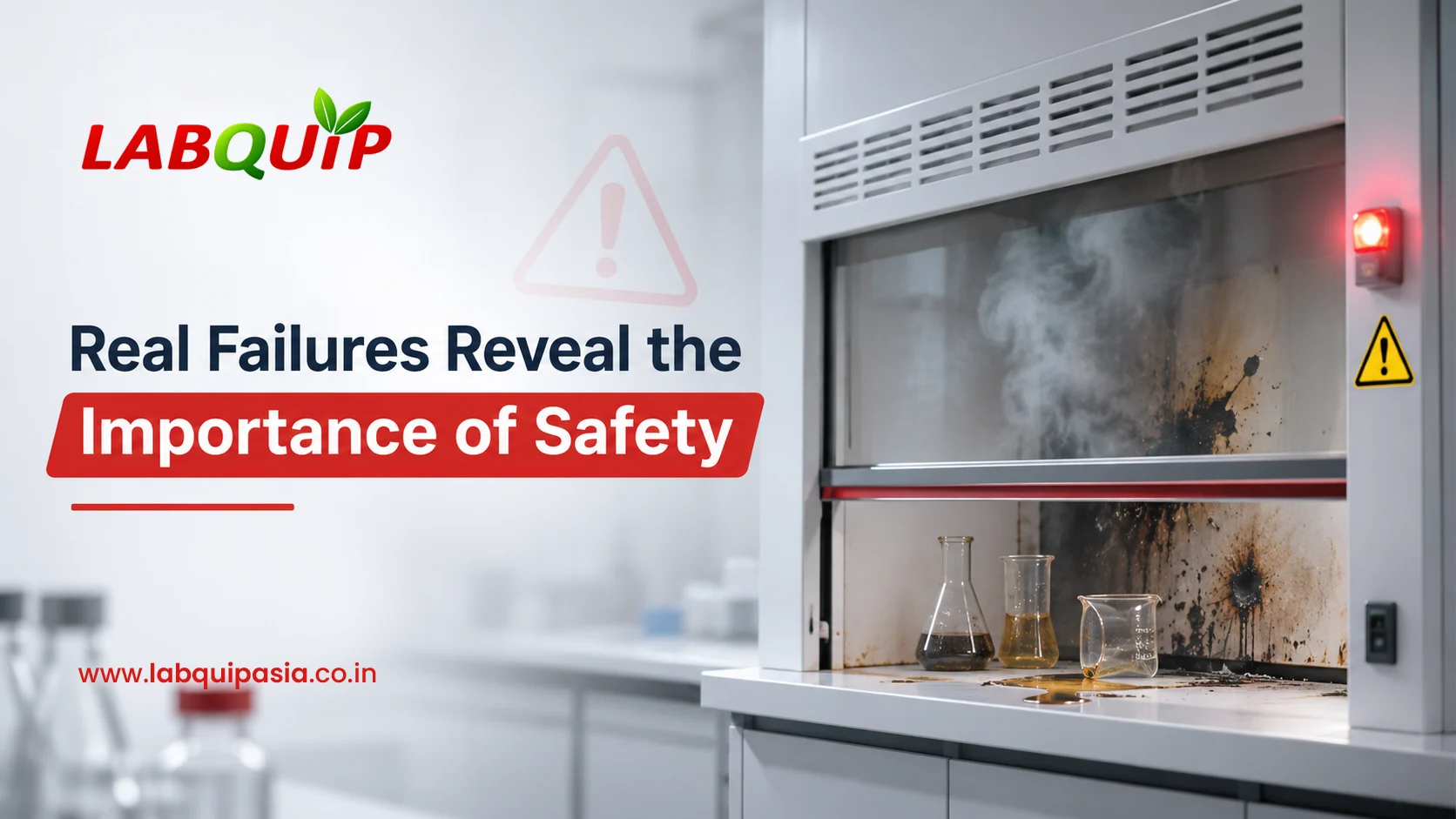
A Laboratory Safety Lesson from a Real Fume Hood Failure
What happens when this essential equipment is not working as expected?
An incident reported by Texas Tech University in September 2023 offers an important lesson for laboratories.
A Real Laboratory Incident
During routine laboratory work at Texas Tech University, a student was transferring hydrochloric acid inside a chemical fume hood. When the pipette tip accidentally fell into the acid, a reaction occurred and fumes began to develop.
Laboratory personnel noticed that the fume hood was not removing the vapours properly and quickly evacuated the room.
The subsequent investigation revealed a concerning detail: the fume hood had been marked as inoperable in November 2022. Despite the warning, it was still being used. Investigators also found that another fume hood in the same space had been marked inoperable during safety surveys in 2023, and both appeared to be in use.
The university highlighted the importance of checking airflow before starting laboratory work, following warning signs and arranging repairs before using faulty equipment.
This incident demonstrates why laboratory ventilation cannot be treated as a routine facility requirement. Its performance directly affects how effectively hazardous fumes are controlled.
Source: Texas Tech University Environmental Health & Safety, September 2023.
The Right Fume Hood
Different laboratory applications involve different chemicals, processes and ventilation requirements. Selecting suitable equipment requires understanding the nature of the work rather than choosing a system based on appearance or size alone.
A chemical fume hood is designed to contain hazardous vapours and fumes generated during laboratory procedures. Depending on the application, laboratories can consider different configurations:
- Ducted Fume Hood: Connects to an exhaust system that removes contaminated air from the laboratory and discharges it outside.
- Ductless Fume Hood: Uses filtration to capture suitable contaminants before the filtered air is returned to the laboratory. Filter compatibility and chemical limitations must be evaluated carefully.
Both options serve different operational requirements. The selection should consider the chemicals being handled, their concentrations, the frequency of use and the ventilation arrangements available.
Why Ventilation Performance Matters
Installing a laboratory ventilation system is only the beginning. Its performance needs to be checked regularly to ensure it continues to function as intended.
Effective laboratory fume extraction depends on several factors, including airflow, exhaust connections, filter condition where applicable and unobstructed ventilation pathways.
Laboratories should also pay attention to routine operating practices. Equipment should remain positioned appropriately inside the hood, airflow indicators should be checked before use, and warning labels indicating equipment failure should never be ignored.
Regular inspection and timely maintenance help identify problems before they affect laboratory operations. If a fume hood is marked out of service, it should not be used until the issue has been resolved and its performance has been verified.
Laboratory Equipment Solutions by Labquip Asia
The Texas Tech incident is a reminder that laboratory safety starts with informed equipment selection and continues through proper operation and maintenance.
As a laboratory equipment supplier, Labquip Asia supports laboratories looking for equipment solutions suited to their working requirements. From fume hoods and ventilated enclosures to other laboratory safety equipment, selecting appropriate systems is an important step towards maintaining a controlled working environment.
Whether a laboratory requires a ducted or ductless fume hood, understanding the application and ventilation requirements can help guide the selection process.
Connect with Labquip Asia to explore your equipment requirements.
Website: https://www.labquipasia.co.in/
Frequently Asked Questions
- 1. What is the main purpose of a laboratory fume hood?
Ans: A fume hood helps contain hazardous fumes and vapours generated during laboratory procedures and removes contaminated air through an appropriate ventilation or filtration system.
- 2. What is the difference between ducted and ductless fume hoods?
Ans: Ducted systems exhaust contaminated air outside the building, while ductless systems use suitable filters to capture contaminants before returning filtered air to the laboratory.
- 3. Why is laboratory fume extraction important?
Ans: It helps control exposure to hazardous vapours and supports safer working conditions during chemical handling and other laboratory procedures.
- 4. How often should a fume hood be inspected?
Ans: Inspection frequency depends on applicable safety standards, institutional policies and equipment requirements. Regular performance checks and maintenance are essential.
- 5. How can laboratories identify fume hood performance issues?
Ans: Warning indicators, abnormal airflow readings, damaged components and unusual operating conditions may signal a problem. A qualified inspection should be arranged before the equipment is used again.